
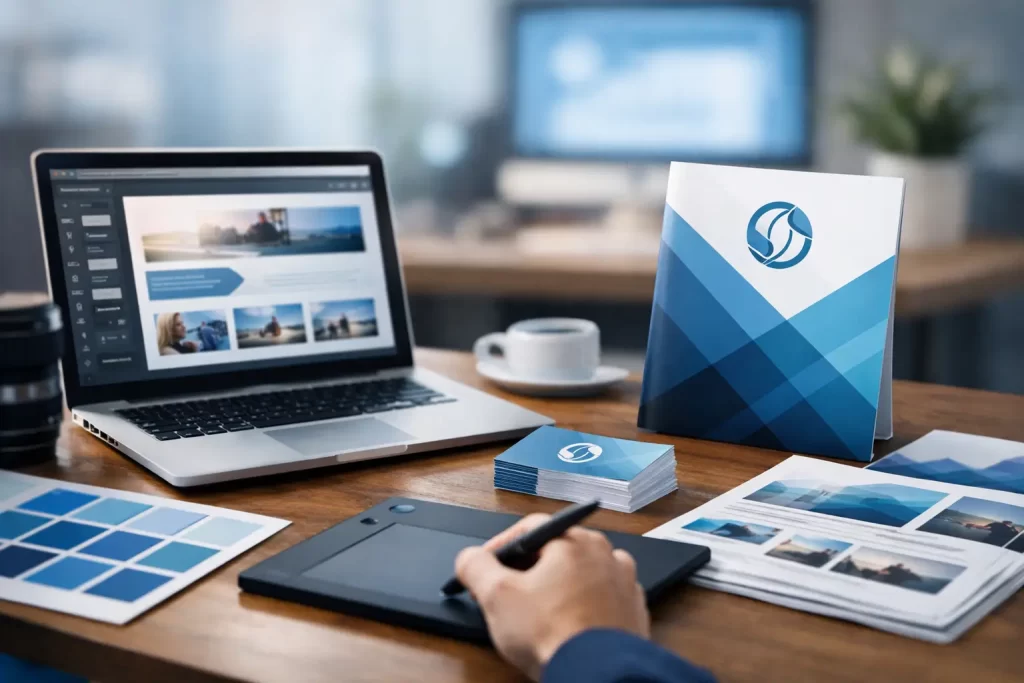
Website and Print Design Packages That Work
A lot of businesses end up with a decent website, a rushed flyer, an old logo file somewhere on a laptop, and signage that does not quite match any of it. That is usually what happens when design gets bought in bits. Website and print design packages solve that problem by bringing the essentials together, so your business looks consistent wherever customers find you.
For small businesses in particular, that consistency is not a nice extra. It affects whether people trust you, remember you, and take the next step. If your van graphics say one thing, your website says another, and your brochure looks like it belongs to a different company, people notice. They may not say it out loud, but it chips away at confidence.
Why website and print design packages make sense
Buying design as separate jobs can look cheaper at first. A website here, leaflets there, maybe a roller banner later on. The trouble is that piecemeal design often costs more over time because each supplier has to work around what already exists, and not always very well.
A package approach gives you a joined-up brand from the start. Your website, printed materials, and core visuals are built to support each other rather than compete for attention. That means your fonts, colours, messaging and imagery all feel like they belong to the same business.
There is a practical side to it too. Dealing with one design partner is simply easier. You are not repeating the same brief to three different people, chasing files, or wondering whether your business cards will match the website that is about to go live. For busy owners, that matters.
What should be included in website and print design packages?
The right package depends on your business, but most worthwhile options should cover the basics that help you get seen and look credible. That usually starts with a professionally designed website and at least some printed material that supports day-to-day sales or marketing.
A simple package for a startup might include a brochure-style website, logo refinement or logo design, business cards, flyers, and social media graphics. For a more established company, the mix may shift towards brochures, signage, exhibition materials, menus, leaflets, or branded documents alongside a more substantial website.
The key is not cramming every possible item into one bundle. It is choosing the assets that your customers are actually going to see and use. A restaurant may need menus, window graphics and a booking-focused site. A trades business may be better off with a clear service website, van graphics, leaflets and quote templates. A hotel or care provider may need more formal printed collateral to support sales conversations.
The website element
Your website is often the first proper impression people get of your business. It needs to look professional, work well on mobile, load quickly enough, and make it easy for people to contact you or request a quote. Good design matters, but so does structure. If visitors cannot find what you do, where you work, or how to get in touch, the design is not doing its job.
A strong website within a package should also reflect the same brand personality customers will see in print. That does not mean every page has to look flashy. It means the tone, visuals and message feel consistent, whether someone lands on your homepage or picks up your brochure at an event.
The print element
Print still carries weight, especially for local businesses and service-led firms. A leaflet through the door, a well-designed brochure at a meeting, a roller banner at an exhibition, or quality signage outside your premises can all do serious work for your brand.
Printed materials often reach people in moments when digital does not. They can sit on a desk, get passed to a colleague, go into a welcome pack, or be picked up at a counter. When they are designed properly, they make your business look established and trustworthy.
The real benefit is consistency
This is where website and print design packages earn their keep. Consistency builds recognition, and recognition helps people remember you when they are ready to buy. It also makes your business feel more organised.
That matters whether you are a sole trader trying to win bigger contracts or an established company tightening up your brand. Customers tend to assume that if your presentation is clear and professional, your service probably is too. It is not always fair, but it is real.
Consistency also helps internally. You are not starting from scratch every time you need a new leaflet or landing page. The design direction is already there. That saves time, keeps standards up, and avoids the slow drift that happens when branding gets altered by different suppliers over several years.
Are packages always the right choice?
Not always, and it is better to be honest about that.
If you already have a strong, well-built website and solid brand guidelines, you may only need print design. If your printed materials are spot on but your website is badly dated, a web-only project may be the smarter move. Packages work best when there is a clear need for joined-up design across more than one touchpoint.
There is also the question of timing. Some businesses need everything at once because they are launching, rebranding, or trying to look sharper quickly. Others are better off phasing the work. Start with the website and core sales print, then add signage, brochures or promotional materials as the business grows.
A good design partner will tell you what makes sense rather than pushing the biggest package possible. If a smaller, more focused option will get better results, that is usually the better investment.
How to choose website and print design packages without wasting money
Start with what your customers actually need to see before they contact you. Think less about what sounds impressive and more about what helps win work.
If most enquiries come from Google, your website probably needs to do the heavy lifting. If you meet clients face-to-face, print may matter just as much. If you attend events, exhibitions or networking days, banners, brochures and handouts are part of the sales process, not just decoration.
It is also worth looking at lifespan. Some assets need to last for years, such as your website structure, logo and signage. Others may be campaign-based or seasonal. The best packages balance long-term brand assets with materials you can update when needed.
Price matters too, especially for smaller businesses, but the cheapest option is not always the most affordable in practice. If you get a low-cost website that needs rebuilding in a year, or printed items that look disconnected from your brand, you pay twice. Better to get the essentials done properly and build from there.
One supplier or several?
There are times when using specialists for separate tasks can work, but for many SMEs it creates more hassle than value. One person designs the website, another handles print, someone else tweaks the logo, and suddenly no one is fully responsible for the finished brand.
With one supplier handling both, the process tends to be smoother. The visuals carry through properly. File setup is cleaner. Timelines are easier to manage. If print delivery is included, even better, because it removes another layer of admin.
That is a big reason many businesses prefer a full-service approach. It feels simpler because it is simpler. You explain your goals once, get advice based on the whole picture, and end up with design that works together.
What good packages look like in practice
A decent package is not just a list of deliverables. It should reflect how your business actually wins customers.
For a startup, that might mean a clean website, a logo, business cards and flyers to get trading quickly. For a hospitality business, it could be a booking-led website, menus, signage and promotional print. For a firm with an existing customer base, it may be a brand refresh, brochure design and an updated website that finally brings everything up to the same standard.
This is where experience counts. A designer who understands both digital and print can spot gaps, flag what is unnecessary, and shape a package around results rather than vanity. That is far more useful than a one-size-fits-all offer.
Grieves Design works with exactly this kind of brief – businesses that want to look sharper, get organised, and stop juggling separate suppliers for websites, print and branded marketing materials.
Website and print design packages should support growth
Good design should make your business easier to trust and easier to buy from. That is the whole point. A package only has value if it helps you show up professionally, communicate clearly, and stay consistent across the places customers meet your brand.
So if your website feels disconnected from your printed materials, or your branding has become a patchwork over time, it may be time to sort it properly. Not with more clutter, and not with fancy extras you do not need. Just with thoughtful design that fits your business, your budget and the way you actually win work.
Get that right, and every brochure, banner, business card and web page starts pulling in the same direction.
