
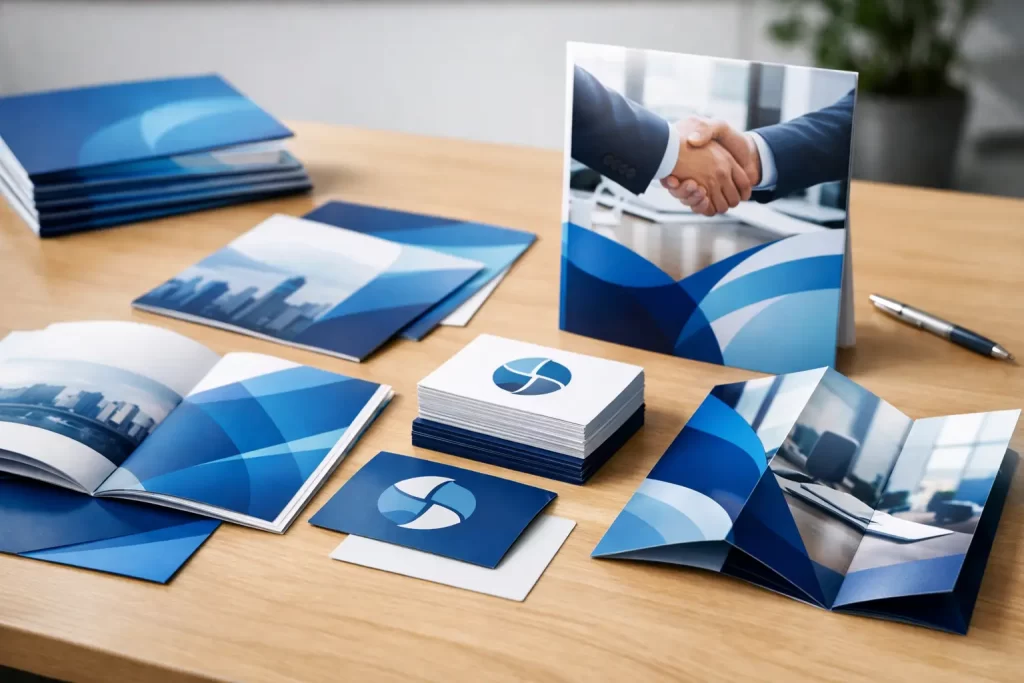
Printed Marketing Materials for Businesses
A smart website matters. Social media matters too. But when someone picks up a well-designed flyer, opens a polished brochure, or spots a strong roller banner at an event, your business suddenly feels more real. That is why printed marketing materials for businesses still earn their place, even in a world full of screens.
Print does a different job to digital. It puts your brand in people’s hands, on counters, in shop windows, at trade shows, in waiting rooms and through doors. It can introduce your business, back up a sales conversation, remind people to book, and help you look established before you have even said a word.
Why printed marketing materials for businesses still work
There is a reason businesses of all sizes still invest in print. People tend to trust what they can physically hold. A decent business card, a tidy leaflet, or a professionally printed menu suggests care, consistency and pride in what you do. If your print looks sharp, people are more likely to believe your service will be too.
Print also has staying power. A social post can disappear in minutes. An email can be ignored and buried. A flyer on a kitchen side, a brochure in a reception area, or signage outside your premises keeps doing its job long after it has been delivered. That makes printed pieces especially useful for local businesses, trades, hospitality, health services and any company that relies on repeat custom or word of mouth.
There is also less competition in a physical space. Online, every business is fighting for attention in the same feed. Offline, your leaflet is not sitting next to a dozen videos and sponsored posts. It has room to be noticed.
The printed materials that make the biggest difference
Not every business needs everything. The right mix depends on what you sell, how you sell it, and where your customers first come across you.
Flyers and leaflets are still one of the most practical tools for promotion. They work well for local drops, event handouts, service menus, seasonal offers and launch campaigns. They are affordable, flexible and quick to update. If you need to get a message out clearly and at scale, they are often the first place to start.
Brochures are better when you have more to say. If your service takes a bit of explaining, or you want to present your business in a more premium way, a brochure gives you the space to do it properly. It can show your work, explain your process, answer common questions and make you look far more credible in meetings or reception areas.
Business cards still matter more than people like to admit. Yes, most people can swap details on a phone. But a good card is quick, personal and useful, especially at networking events, appointments and site visits. It also gives people something to keep. That small detail can make the difference between being remembered and forgotten.
Roller banners and signage are often underestimated. They are brilliant for exhibitions, open days, shopfronts and pop-up spaces because they help people understand who you are in seconds. If someone has to work too hard to figure out what your business does, you have already lost momentum.
Menus, appointment cards, postcards, folders and branded stationery all have their place too. The key is not choosing the longest list of items. It is choosing the pieces that support the way your business actually operates.
Good print is not just about looking nice
Design that looks attractive but does not help the customer is only doing half the job. Strong printed marketing materials for businesses need to guide attention, carry the right message and make it easy for someone to take the next step.
That starts with hierarchy. Your business name, service, offer and contact details should be clear at a glance. Too many printed pieces try to say everything at once, which usually means nothing lands properly. Cleaner layouts nearly always perform better because they respect the reader’s time.
Colour, typography and imagery matter as well, but consistency matters even more. If your leaflet looks one way, your website another, and your signage something else entirely, your brand can start to feel disjointed. People may not always be able to explain why, but they notice when things do not match.
Then there is print quality itself. Thin paper, poor finishes and muddled artwork can drag the whole thing down. That does not mean every job needs the most expensive stock available. It means the quality should suit the message. A luxury brochure for a high-end service needs a different feel to a leaflet for a takeaway offer. It depends on your audience, your budget and what you want that piece to achieve.
Choosing the right printed marketing materials for your business
The easiest way to waste money on print is to order materials because you think you should have them, not because they serve a purpose.
Start with where your customers meet you. If you rely on footfall, signage, window graphics and printed takeaway menus might be doing more heavy lifting than any brochure ever could. If you sell business to business, a smart brochure, presentation folder and business card may be more valuable. If your work is local and repeat-based, leaflets and postcards can be a sensible way to stay visible.
You should also think about timing. Some print needs a long shelf life, so it is worth keeping the message broad and evergreen. Other items can be campaign-led, such as event flyers or seasonal promotional material. If your prices, services or offers change often, do not overcomplicate the design or over-order quantities.
That is where a bit of practical advice helps. Plenty of businesses spend too much on large print runs before they know what works. Others underinvest and end up with materials that do not reflect the standard of the business. The right answer is usually somewhere in the middle.
Common mistakes that weaken print
The most common issue is trying to squeeze in too much information. If every inch is filled with text, badges, phone numbers, photos and offers, the reader will not know where to look. White space is not wasted space. It is what gives the important parts room to stand out.
Another mistake is weak branding. That can mean inconsistent colours, a low-quality logo, or no real visual identity at all. You do not need to be flashy, but you do need to look like the same business wherever people see you.
Poor calls to action are another problem. If someone reads your flyer and likes what they see, what happens next? Should they ring you, book online, visit your premises, bring the leaflet in, or scan a code? If that next step is vague, response rates suffer.
There is also the temptation to treat print as separate from the rest of your marketing. In reality, it works best when it supports your digital presence. A leaflet can send people to your website. A brochure can reinforce what they have already seen on social media. A business card can give them the confidence to get in touch after a first meeting. Print and digital are not rivals. They are better together.
What businesses should expect from a design and print partner
You should not have to become a print expert just to order a brochure or some leaflets. A decent design partner will ask what the material is for, who it is aimed at, how it will be used and what result you want from it. That is far more useful than simply asking what size you fancy.
The best print work is grounded in business goals. Sometimes that means recommending a simpler solution than you expected. Sometimes it means improving your branding first so that every printed item works harder. A good partner will also help with the practical side – artwork setup, stock choices, finishes, quantities and delivery – so the whole process feels straightforward.
That is where working with an experienced local team can make life easier. At Grieves Design, we see plenty of businesses that know they need to look better but are not sure where to begin. Often, a few well-chosen printed pieces can sharpen the brand, support sales and make the business feel more established almost immediately.
Print should earn its keep
The best printed materials are not there to tick a box. They should help you get noticed, look professional and make it easier for customers to choose you. Sometimes that is a leaflet that brings in calls. Sometimes it is a brochure that helps close larger work. Sometimes it is simply a business card that makes the right impression at the right moment.
If your current print feels dated, inconsistent or forgettable, that is usually a sign it is time for a rethink. A well-designed printed piece still has real weight in the hands of a potential customer, and for many businesses, that is exactly what turns interest into action.
