
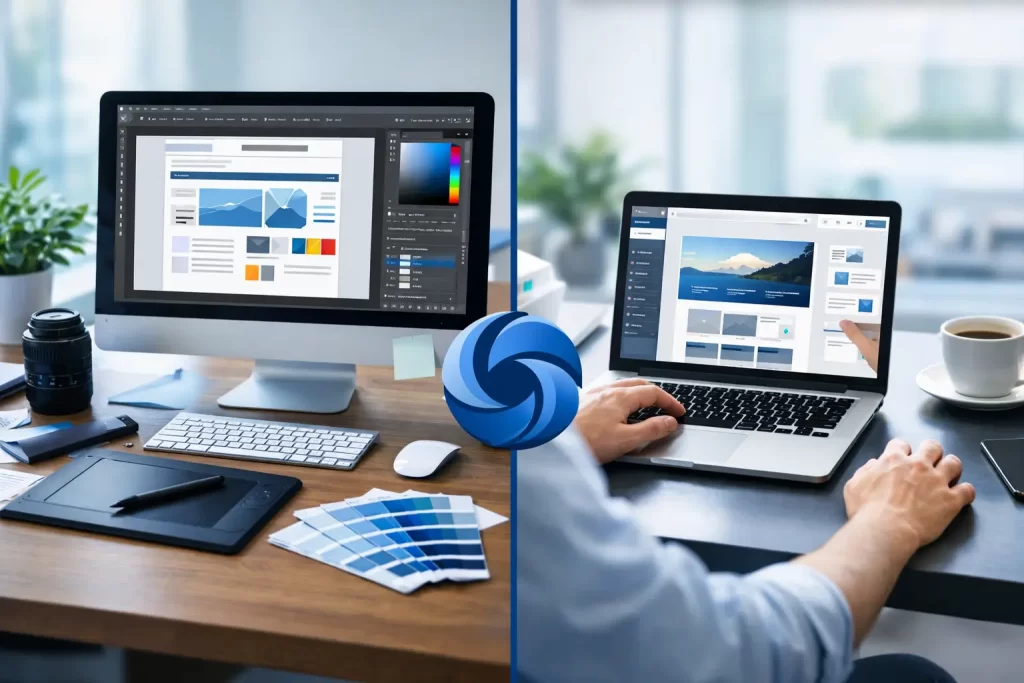
Website Design vs Website Builders
A lot of business owners start in the same place. They need a website quickly, they have got a budget to watch, and a website builder promises they can have something live by teatime. That is why the question of website design vs website builders matters so much. It is not just about getting online. It is about whether your website will actually help your business look credible, get found, and bring in enquiries.
For some businesses, a website builder is a perfectly sensible starting point. For others, it becomes a false economy within months. The right choice depends on what you are trying to achieve, how much control you want, and whether your website is there to simply exist or to actively win work.
Website design vs website builders – what is the difference?
A website builder is a platform that lets you create a site using pre-made templates, drag-and-drop sections, and built-in tools. It is designed to make the process quick and accessible, especially if you have little or no technical experience.
Website design, on the other hand, is a professional service. It usually means your site is planned around your business, your customers, your brand, and your goals. That includes layout, messaging, user journey, visual identity, mobile performance, and often the wider marketing side too.
That difference matters more than many people expect. A builder helps you assemble a website. Professional website design helps you shape one that works commercially.
When a website builder makes sense
There is no point pretending builders are useless. They are not. If you are a sole trader just getting started, testing a business idea, or needing a very simple online presence, a builder can do the job.
If all you need is a few pages, contact details, a basic gallery, and a straightforward way for people to find you, then a builder may be enough for now. It can also suit businesses that enjoy doing things themselves and have the time to keep everything updated.
The appeal is obvious. Lower upfront cost, fast setup, and no need to wait on a designer. You can log in, swap photos, edit text, and make changes whenever you like.
But there is always a trade-off. Simplicity is the selling point, yet it is also the limit.
Where website builders start to fall short
The first issue is sameness. Templates are built to suit everyone, which often means they fit nobody particularly well. You may be able to change colours, fonts, and images, but the overall structure often stays fairly generic.
That can be fine if your industry is not competitive. If it is, looking like everyone else is a problem. A website should help customers remember you, trust you, and understand why they should choose you over the next business down the road.
The second issue is strategy. Most builders can help you place text and images on a page. They do not tell you what your customers need to see first, how to guide people towards an enquiry, or how to make your brand feel established and professional.
Then there is growth. Many businesses outgrow builders once they want something more tailored, whether that is better lead generation, stronger SEO foundations, booking systems, extra integrations, or a site structure that reflects how they actually sell.
What professional website design gives you
A professionally designed website should not just look nicer. It should make business sense.
That starts with understanding what you do and who you are trying to reach. A tradesperson needs something different from a hotel, a salon, a restaurant, or a healthcare organisation. The layout, tone, imagery, and calls to action should all reflect the audience and the kind of trust they need before getting in touch.
Good website design also considers your brand as a whole. If your logo, print, signage, brochures, and social presence all say one thing, your website should support that rather than feel like a separate afterthought. Consistency helps people recognise you and take you seriously.
It also gives you room to build properly. Instead of squeezing your business into a template, the website is shaped around how you work. That makes a real difference when your services are varied, your customer journey is more detailed, or your site needs to do more than present a few basic pages.
Cost is not as simple as it looks
This is where many comparisons go wrong. On the surface, builders look cheaper and website design looks more expensive. That is often true at the start, but it is not the whole story.
A builder usually means a monthly fee, plus your time, plus any add-ons, plus the cost of fixing things later if the site is not performing well. If you spend hours tweaking layouts, rewriting sections, struggling with mobile views, and still end up with a site that does not convert visitors into customers, the cheap option can become costly.
Professional website design has a higher upfront investment, but that investment often buys clarity, stronger branding, better structure, and less trial and error. If the website helps you win more work, command more trust, and avoid needing a rebuild in six months, the value becomes much clearer.
It depends on the stage your business is at. If cash flow is tight and speed matters most, a builder can be useful. If your website is central to how you attract business, the cheapest route is rarely the smartest one.
Website design vs website builders for branding
Branding is often where the gap becomes obvious.
A website builder can display your logo and colours, but that is not the same as building a strong brand presence. Real branding is about how the site feels, how clearly it communicates your offer, and whether it gives people confidence in your business.
For small businesses especially, perception matters. People make quick judgements online. If your site looks pieced together, thin on content, or awkward on mobile, some visitors will assume your service is the same. That may not be fair, but it happens.
Professional website design helps present your business properly. It can make a smaller company look more established, a local business look more polished, and a growing brand look ready for the next step. That is a big part of why design is not just decoration. It affects trust.
SEO, performance and practical reality
Most website builders now claim to be SEO-friendly, and many have improved a lot. They can cover the basics. You can set page titles, add text, and follow standard recommendations.
Even so, SEO is not simply a box-ticking exercise. Site structure, page intent, content quality, loading speed, mobile usability, and user experience all play a part. A professionally planned website often handles these things more thoughtfully because they are considered from the start rather than added afterwards.
Performance is similar. A builder may be perfectly adequate for a small brochure site. But if the site becomes heavier, more customised, or more important to your marketing, you may start noticing limitations.
That does not mean every custom-designed website will outperform every builder site. It means you usually have more control when the site is designed properly around your needs.
Which option is right for your business?
If you only need a basic online presence and you are happy doing things yourself, a builder may suit you well. It can get you online quickly and keep costs predictable.
If you want your website to support lead generation, reflect a proper brand, and grow with your business, professional website design is usually the stronger option. It is especially worthwhile if you are in a competitive market, rely on credibility, or need more than a standard template can comfortably deliver.
A useful way to think about it is this. Are you building a temporary presence, or are you creating a business asset?
That question tends to bring the answer into focus.
For many businesses across the North East and beyond, the best route is not choosing the fanciest option. It is choosing the one that matches where the business is now and where it wants to go next. Grieves Design works with plenty of clients who started simple and then reached the point where they needed a site that looked sharper, worked harder, and felt more like their business.
There is no shame in starting with a builder. Plenty of good businesses do. But if your website is starting to feel like a compromise, that is usually a sign. Your site should make life easier, not leave you wrestling with templates at half ten on a Tuesday night.
The right website should give people confidence before they ever pick up the phone. If it does that well, it stops being a cost and starts becoming one of the hardest-working parts of your business.
