
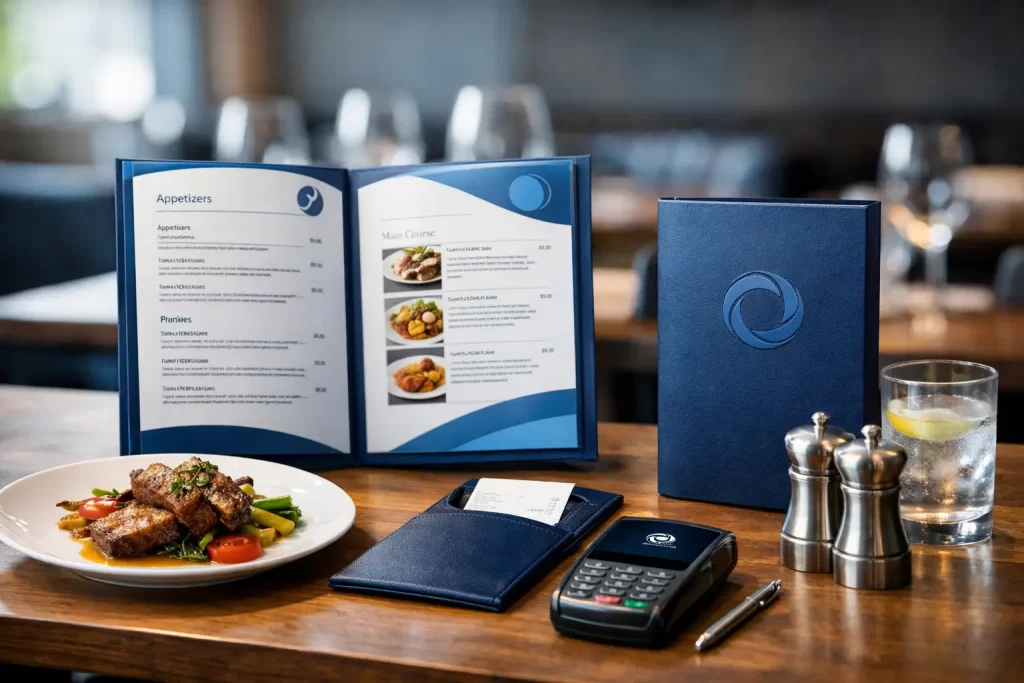
Menu Design and Print That Sells More
A menu has a job to do long before anyone takes a first bite. It needs to look right, feel right in the hand, fit your brand, and make ordering easy. Good menu design and print is not just about making things look smart. It helps customers choose faster, notice your high-margin items, and trust that your business is well run.
That matters whether you run a café, takeaway, pub, restaurant, hotel bar or street food venue. If your menu is cluttered, hard to read, cheaply printed or out of step with your branding, people notice. They may not say it out loud, but it affects how they see your food, your prices and your professionalism.
Why menu design and print matter more than people think
Most business owners already know their food needs to be right. What often gets less attention is how the menu shapes buying behaviour. The layout directs the eye. The wording sets expectations. The print finish tells people something about quality before the first dish lands on the table.
A folded takeaway menu has a different role from a premium drinks list. A children’s menu needs clarity and durability. A restaurant menu may need to support a slower, more considered choice. There is no single correct style, and that is where experience helps. The right answer depends on your customers, your setting and how you want people to buy.
If you are updating prices often, a large print run on heavyweight stock may not make much commercial sense. If you are aiming for a polished dining experience, thin paper with a basic finish can let the whole brand down. Good design is always tied to practical use.
Start with how customers actually order
Before colours, fonts or paper stocks come into it, the first question is simple. How do your customers use the menu? Are they queuing at a counter, sitting at a table, grabbing a quick lunch, ordering for delivery, or browsing while waiting at a hotel bar?
That one detail changes everything. A busy takeaway menu often needs clear categories, quick scanning and obvious deals. A restaurant menu can afford a little more breathing room and a stronger sense of atmosphere. A drinks menu may benefit from cleaner spacing and stronger hierarchy so premium options stand out without looking forced.
This is where many menus go wrong. They try to say everything at once. Too many sections, too many type styles, too much text, too many boxes shouting for attention. When every item is trying to be the star, nothing stands out.
A better approach is to guide the eye. Lead people naturally from categories to featured dishes to add-ons and upgrades. Keep the structure obvious. Make the most profitable items easy to spot, but not in a way that feels pushy or messy.
What good menu design looks like in practice
Strong menu design is usually less flashy than people expect. It relies on balance, clear hierarchy and consistency rather than gimmicks. The brand should come through, but readability must always win.
Typography does a lot of heavy lifting. Fancy scripts may suit a heading or logo, but they are rarely the best choice for body text or prices. Customers should never have to squint, guess or spend too long hunting for information. If they do, the ordering experience becomes slower and more frustrating.
Photography can help, but only when it is done properly. A few strong images are far more effective than a menu crammed with poor-quality photos. In some settings, especially more premium ones, no photos at all can work better. It depends on the audience. A family takeaway may benefit from visual reassurance. A bistro-style menu may feel more confident without it.
There is also the question of wording. Dish names and descriptions need to be appealing, but still clear. Overwriting can make simple food sound awkward. Underwriting can make it hard to justify price. The best menus strike a balance between personality and usefulness.
Menu design and print should match your brand
Your menu should feel like part of your wider business, not a separate thing that was put together in a rush. If your signage, website, social media and in-store branding all have one look, but your menu feels generic, it creates a disconnect.
Customers may not analyse it in design terms, but they do feel the difference. Consistent branding builds trust. It makes a business feel established and considered. That is just as important for independent venues as it is for larger hospitality brands.
This does not mean every menu needs to be trendy or expensive-looking. It means the style should suit the business. A modern burger brand, a traditional pub and a wedding venue should not all look the same. The right design reflects who you are and what your customers expect when they walk through the door.
For many businesses, this is where working with a proper designer saves time and avoids costly mistakes. You get a menu that not only looks the part, but also sits neatly alongside your other marketing and printed materials.
Print choices make a real difference
Once the design is sorted, print is not an afterthought. It changes how the menu performs in the real world. Stock, finish, size and format all affect durability, readability and perceived quality.
For high-turnover environments, lamination or wipe-clean finishes can be a smart choice. They stand up better to spills, sticky tables and repeated handling. For takeaway menus, lighter stock may be more cost-effective, especially when you need volume. For premium dining, thicker stocks and high-quality finishes can add a sense of weight and polish.
Size matters too. Oversized menus can feel awkward on smaller tables. Tiny folded menus may not leave enough room for clear pricing and descriptions. There is always a balance between what looks good and what works.
Print quantity is another area where being practical matters. Ordering more usually lowers unit cost, but that only helps if the menu stays current. If your prices change often or you rotate dishes seasonally, smaller print runs may be the better option. Saving a bit per menu means very little if half the batch becomes outdated.
Common menu mistakes that cost businesses money
The biggest mistake is trying to fit too much in. Too many items can make customers hesitate. Decision fatigue is real, especially in busy environments where people want to order quickly and feel confident they have chosen well.
Another common issue is poor pricing presentation. Menus do not need tricks, but they do need thoughtful layout. If prices dominate the page, the customer’s focus can shift straight to cost rather than value. If prices are hard to find, that creates irritation. There is a middle ground.
Cheap print can also backfire. If colours reproduce badly, text looks fuzzy or the menu wears out quickly, it sends the wrong message. In hospitality, presentation and trust are closely linked. A tired-looking menu can make even good food feel less premium.
Then there is the problem of inconsistency. Different fonts, mismatched colours, outdated logos and low-resolution graphics all chip away at credibility. None of these issues sounds dramatic on its own, but together they create a menu that feels makeshift rather than professional.
Getting the right result without overcomplicating it
A good menu project should not feel like hard work from the client side. You should be able to bring your dishes, prices and rough ideas to the table and have them shaped into something that works properly. That includes design advice, sensible format recommendations and print options that suit your budget and day-to-day use.
For some businesses, that might mean a straightforward takeaway menu and matching flyer. For others, it could be a full set of printed menus, drinks lists, table talkers and wider branded print. The key is making sure each piece earns its place and supports sales.
If you are based in the North East and want a design partner who understands both the creative side and the practical side, that kind of joined-up service makes life easier. Grieves Design works with businesses that need professional design without agency waffle, and menus are a good example of where smart choices can make a visible difference.
A well-designed menu does more than present food and drink. It helps people decide, supports your pricing, strengthens your brand and makes your business look the part. If yours is outdated, awkward to use or not pulling its weight, it is probably time to give it a proper rethink. Sometimes the quickest win is not changing what you sell, but changing how you present it.
